TL;DR
Pet food manufacturers interviewed by GlobalPETS describe increased investment in quality teams, testing, traceability and production controls. A 2026 CRB survey found 47% of more than 300 North American food and beverage manufacturers had increased food safety-related operational investment over two years, but it did not report pet food findings separately.
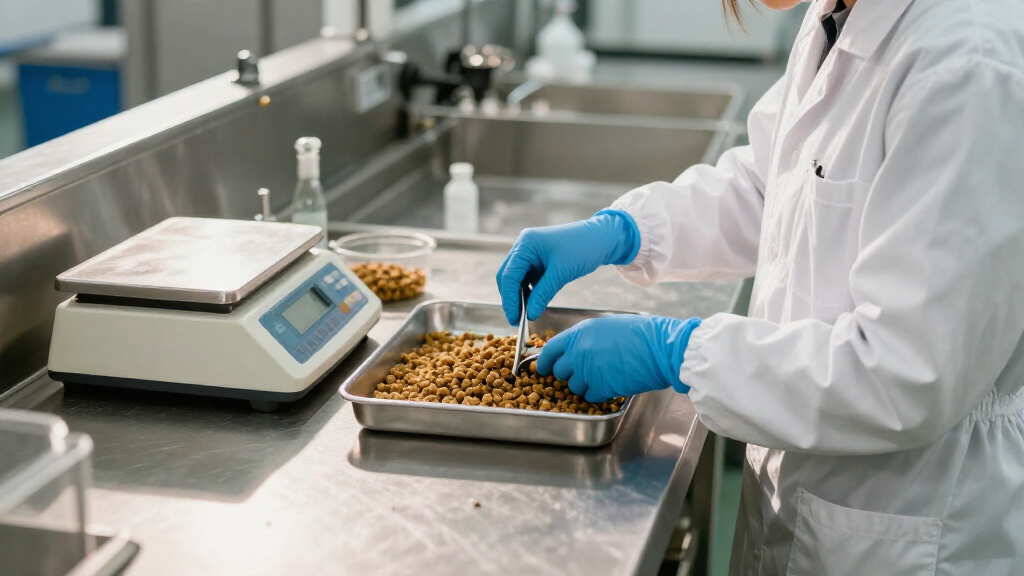
Pet food makers are increasing spending on quality assurance and food safety, including laboratory testing, supplier checks, traceability and production monitoring, according to company interviews in a GlobalPETS analysis. The report places those efforts alongside a wider industry trend: 47% of more than 300 North American food and beverage manufacturers surveyed by engineering and consulting firm CRB said they had increased investment in food safety-related operational improvements compared with two years earlier.
UK-based Burgess Pet Care increased its food safety and quality-control investment as a proportion of revenue by 63% over the past two years, Technical Manager Trish Parker told GlobalPETS. She said the spending covers staff and training, laboratory testing, supplier assurance, quality systems, traceability, calibration, hygiene and manufacturing process verification. Parker said the investment is growing faster than the company’s business, but did not provide the underlying spending amount.
German company Josera Petfood did not disclose its food safety spending. It said 40 people work across quality management, quality assurance and laboratory functions. Head of Quality Assurance Ulrike Waber said the company expanded those teams and introduced more effective analytical methods as it commissioned a new pet food plant in Poland. The company uses a SAP-based enterprise resource planning system to bring together batch information, supplier documents and audit records.
Companies described different approaches to tracking products and checking production. Josera said it can complete batch traceability in less than four hours, while Burgess said internal stock traces can be completed in minutes and supplier-linked traces usually within two hours, and always within four. Purely Golden Foods founder Irene Ou said each ingredient lot can be linked to the finished batch in which it was used. The companies also cited controls such as validated cooking parameters, cold-chain management, sanitation checks and production sequencing to reduce contamination and ingredient carry-over risks.
Faster Tracing, More Production Checks
Food safety investments matter because manufacturers need to identify affected products and ingredients quickly when a quality problem or recall arises. The company-reported tracing times suggest that batch records and supplier documentation can help narrow the search from finished goods back to raw materials. These are company descriptions of their own systems, not independently verified comparisons of performance across the sector.
Testing and process monitoring also serve different roles: laboratory and on-site analysis can help check ingredients and product consistency, while sanitation procedures and controlled production sequences address contamination risks. CRB’s broader survey found that 17% of respondents identified insufficient traceability as a key challenge in executing a recall within 24 hours. Its findings underline why records and operating procedures remain relevant even as manufacturers add digital tools.
Products Worth Considering

MateeyLife Napfunterlage Katzen, Napfunterlage Hund Groß Hundenapf | Kleine Hunde, Silikon Unterlage Hundenapf Grosse Hunde, rutschfeste Unterlage Katzennapf, Katzen Futternapf Matte, 45 x 30 cm
Sicher & Weniger Unordnung: Unsere napfunterlage katzen & napfunterlage hund sind aus hochwertigem silikon in lebensmittelqualität und sicher…

Gorilla Grip SilikonHaustierFuttermatte, wasserdicht, erhöhte Kanten, um Verschütten zu verhindern, einfache Reinigung in der Spülmaschine, für Hunde und Katzen, Platzierungstablett für Futter und
Wasserdichtes Design: Die Silikonmatte ist zu 100 % wasserdicht, um den Boden vor schmutzigen Lebensmitteln und Wasser zu…

Hubulk Futtermatte für Hunde und Katzen, Größe L (48.3 x 30.5 cm), XL (61 x 40.6 cm) oder XXL (81 x 61 cm), 1.3 cm und 2.5 cm, erhöhter Rand, Silikon, rutschfest, groß (48.3 x 30.5 x 1.3 cm), grau
Größe L ist "48,3 x 30,5 cm
As an affiliate, we earn on qualifying purchases.
Industry Survey, Pet Food Examples
The CRB figures cited by GlobalPETS come from a 2026 survey of more than 300 North American food and beverage manufacturers. The report said 54% of respondents could trace products to their source within hours, while 29% said tracing could take up to a day. Those results cover food and beverage manufacturing overall; CRB did not break them out for pet food, so they cannot establish a pet food-specific industry rate.
Digitalisation is another area of wider interest. CRB reported that the share of respondents planning to integrate and digitalise facilities using predictive, real-time analytics rose from 39% in 2025 to 44% in 2026. The survey also identified capital costs, uncertain returns on investment and operational complexity as barriers to adopting advanced processing technologies. The analysis notes that physical segregation remains one practical control: 67% of surveyed manufacturers said they use it to manage allergens.
““We can complete batch traceability in less than four hours.””
— Ulrike Waber, Head of Quality Assurance at Josera Petfood
Sector-Wide Impact Is Unclear
The available figures do not show how much the pet food sector as a whole is spending, or whether companies’ reported investments have reduced recalls, contamination incidents or product defects. CRB’s survey combines food and beverage manufacturers and does not give a separate pet food result. Burgess disclosed a percentage change in investment relative to revenue, but not the amount spent; Josera did not disclose spending figures. The company accounts are interview statements, and the source material does not provide independent audits of the reported traceability times or outcomes.
It is also unclear how widely smaller manufacturers can adopt advanced testing and digital systems given the cost and operational barriers identified by CRB. The survey’s results describe reported plans and practices, not proof that all manufacturers have implemented new technology or that it has improved safety outcomes.
More Data Needed on Results
The next useful evidence will be comparable, pet food-specific data on investment, traceability performance and food safety outcomes. For now, the companies’ accounts show the controls they say they are using, while the CRB survey offers a broader food and beverage benchmark. Further reporting or future industry surveys may clarify whether the investment trend is widespread in pet food and whether it produces measurable changes in testing speed, recall readiness or contamination prevention.
Key Questions
Are pet food companies increasing food safety investment?
Companies interviewed by GlobalPETS described increased investment or expanded quality functions. Burgess Pet Care said its food safety and quality-control investment as a proportion of revenue rose by 63% over two years. The CRB survey found a broader increase across food and beverage manufacturers, but did not provide a separate pet food figure.
How quickly can the companies trace a pet food batch?
Josera Petfood said it can complete batch traceability in less than four hours. Burgess Pet Care said internal stock traces take minutes, while traces requiring supplier information usually take under two hours and are completed within four. These are company-reported times.
What safety measures are manufacturers adding?
The companies cited laboratory and on-site testing, supplier assurance, digital batch records, process monitoring, sanitation verification, controlled production sequencing and checks on cooking and cold-chain conditions.
Does the CRB survey prove pet food safety has improved?
No. The survey covers food and beverage manufacturers in North America and does not separate out pet food companies. It reports investment and practices, not proof that safety outcomes improved.
Source: rss