This checklist is for dog owners who want to make car rides more comfortable and organized for their dogs. It covers essentials for the back seat, restraint and separation, and staying hydrated on the go, with practical guidance for deciding what fits your setup.
The sections follow the main jobs these items can do: protect seating, provide a raised place to sit, help restrain or contain a dog, manage window access, and carry water. Some entries include a named pick, while the booster seat and window vent guard sections offer shopping advice without a specific product.
Use the checklist by starting with your vehicle, your dog’s size and travel habits, and how you plan to secure them. Check measurements and compatibility details before buying, and treat comfort accessories separately from travel restraint decisions.
Dog Car Seat Cover
A seat cover can help protect the back seat from dirt, fur, and wet paws while giving your dog a defined place to ride. The listed pick, Ruff Liners Back Seat Extender and Waterproof Cover for Dogs, combines a cover with an extender, so consider whether you want the coverage to extend across the seating area. Vehicle fit matters: compare the product’s dimensions and attachment points with your vehicle’s seats, headrests, and seat-belt access.
A common mistake is choosing by the word “universal” or by appearance alone. A cover that shifts, blocks access to buckles, or does not suit the shape of your back seat may be inconvenient. Check how it attaches, whether the extender suits your seating layout, and how the cover can be cleaned. Think about your dog’s size and whether they tend to lie down, sit upright, or move around. Measure first, and confirm the product’s stated fit and care instructions before purchasing. A cover can protect upholstery, but it should not be treated as a restraint; plan separately for an appropriate way to secure your dog during travel.
What to look for:
- Measure the seating area and compare it with the cover dimensions.
- Check attachment points against your headrests and seat layout.
- Confirm that seat-belt buckles remain reachable for your restraint setup.
- Consider whether the extender suits how your dog settles in the car.
- Review the stated cleaning and care instructions.
Ruff Liners Back Seat Extender and Waterproof Cover for Dogs

This rear-seat extender has a hard-board base that expands usable space by 40% and supports up to 400 lbs. Its waterproof, washable Oxford quilt surface, door panel protection, mesh ventilation, and storage pouch help protect the car interior and keep pets or cargo secure.
Pros:
- Hard bottom expands seating space by 40% and supports up to 400 lbs.
- Waterproof surface is wipeable and machine-washable.
- Door panel protection helps block scratches, drool, and muddy paw prints.
- Mesh ventilation, anchors, and a non-slip underside support a secure setup.
Cons:
- Standard size does not fit full-size trucks or full-size SUVs.
- Does not work with captain’s chairs, rear-hinged truck doors, or third-row seats.
Best for: Owners looking for a back-seat cover with an extender.
Not ideal for: Drivers whose seat layout or attachment points do not match the stated fit.
Bottom line: Check the cover’s dimensions, attachment method, and buckle access before choosing the Ruff Liners option.
Dog Car Booster Seat
A booster seat can give a small dog a dedicated place to sit, but the right choice depends on your dog and the vehicle. Start with your dog’s weight and measurements, then compare them with the maker’s stated limits and the seat’s interior dimensions. Check that the seat can be installed in your intended position and that its instructions explain how it works with your vehicle’s seating and restraint arrangement. Fit and installation deserve more attention than a raised look alone.
A frequent buying mistake is assuming that a booster seat itself secures a dog. Read the product instructions to understand whether a compatible harness or other restraint is required, and how it attaches. Confirm that the dog can sit or lie comfortably without being cramped, and that the setup leaves the vehicle’s seat belt and other required features usable. Avoid relying on a seat that shifts or cannot be installed as directed. Since no specific booster pick is listed here, compare products by clear sizing guidance, installation details, and compatibility with your restraint plan. If those details are unclear, keep looking.
What to look for:
- Compare the dog’s weight and measurements with the maker’s stated limits.
- Check interior dimensions for comfortable sitting and resting.
- Read installation instructions for your vehicle’s seating position.
- Confirm whether a separate compatible restraint is needed.
- Make sure the setup does not obstruct seat-belt access.
Dog Car Safety Harness
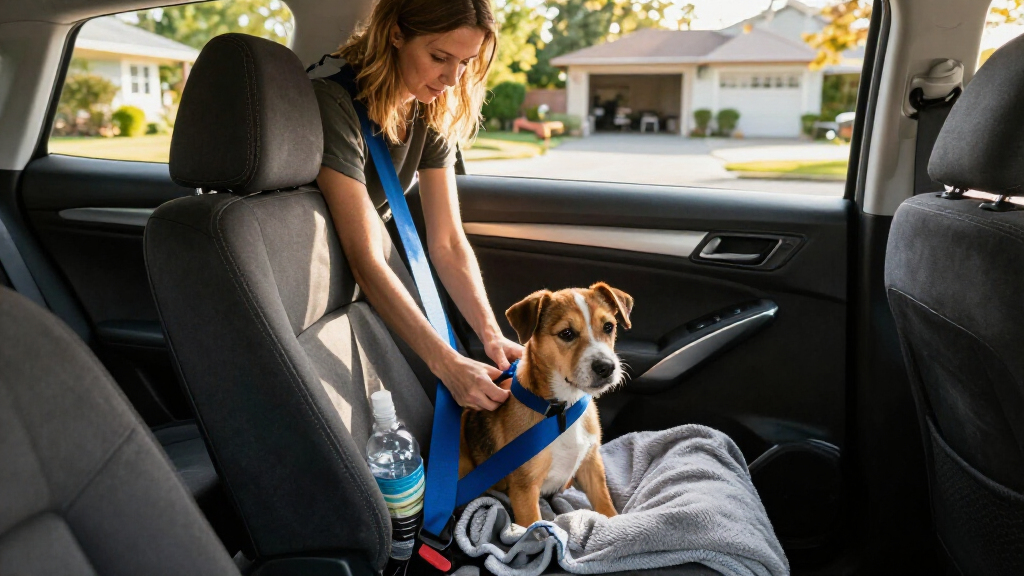
A car harness is intended to help keep a dog restrained during travel, so sizing and the maker’s vehicle-use instructions are central to choosing one. The listed pick is the EzyDog Drive Dog Car Harness, Crash-Tested and Certified, Medium. Because this is a medium size, compare your dog’s measurements with the manufacturer’s sizing chart rather than assuming size from breed or weight alone. Check the fit at the chest and neck as directed, and look for adjustment that allows a secure, comfortable fit.
One common mistake is treating any walking harness as suitable for car travel. Read the product’s stated use and installation directions, including how it connects to the vehicle and what components are required. Confirm that the harness works with your vehicle’s seat-belt arrangement and that it does not interfere with buckle access. Also check the maker’s guidance on adjustment and inspection. A “crash-tested” or “certified” phrase in a product name should lead you to the manufacturer’s details about what that claim covers. Follow the instructions for putting it on and securing it every trip; a harness that is the wrong size or attached incorrectly may not perform as intended.
What to look for:
- Use the manufacturer’s sizing chart and your dog’s measurements.
- Check the stated car-travel use and installation directions.
- Confirm how the harness connects to your vehicle’s restraint system.
- Make sure the buckle remains accessible and the setup fits your seat.
- Review the maker’s details for any testing or certification claims.
EzyDog Drive Dog Car Harness, Crash-Tested and Certified, Medium

This crash-tested dog car harness is designed to meet USA FMVSS 213 safety standards and attaches using your vehicle’s existing seat belt. It features durable webbing, aluminum alloy hardware, an adjustable padded chest plate, quick-release buckles, and dual leash attachment points.
Pros:
- Crash-tested and designed to meet FMVSS 213 standards
- Attaches to a vehicle’s existing seat belt
- Padded, contoured chest plate for comfort
- Durable materials and dual leash attachment points
Cons:
- Requires an initial fit adjustment
Best for: Owners whose dog matches the maker’s medium sizing guidance.
Not ideal for: Dogs outside the stated size range or vehicles incompatible with the instructions.
Bottom line: Verify your dog’s measurements and the vehicle connection details before selecting this harness.
Dog Car Barrier
A barrier can help create separation between the passenger area and a dog riding behind it. The listed pick is the ZooKeeper Original Zookeeper Car, SUV, and Truck Adjustable Dog Barrie. Its name indicates adjustable use across car, SUV, and truck categories, but you should confirm the actual fit for your vehicle before buying. Measure the space where the barrier will sit and compare those measurements with the product’s range and installation directions.
A common mistake is assuming that a barrier will fit every vehicle in a listed category or will securely contain every dog. Check the mounting points, the shape of the cargo area or cabin, and whether headrests or interior features affect installation. Consider your dog’s size and behavior, then review the manufacturer’s guidance about intended use and limitations. Make sure the barrier does not block your view or interfere with vehicle controls, doors, or other safety features. A barrier is a divider; it should not automatically be considered a substitute for a dog restraint. Check fit and purpose in the product instructions and decide whether a separate harness or other setup is needed for your trip.
What to look for:
- Measure the intended installation area in your specific vehicle.
- Check the product’s stated adjustment range and mounting points.
- Confirm compatibility with your vehicle’s interior features.
- Review guidance about intended use and dog size or behavior.
- Ensure installation does not obstruct visibility, controls, or doors.
ZooKeeper Original Zookeeper Car, SUV, and Truck Adjustable Dog Barrier

The ZooKeeper EZ Pet Barrier is an adjustable, easy-to-install dog gate designed to keep pets secure in the backseat of various vehicles. Made in the USA, it fits vehicles from cars to trucks and features a flexible, tool-free setup that tilts, slides, and reclines with seats for maximum convenience.
Pros:
- Adjustable to fit a variety of vehicle sizes
- Easy to install and remove without tools
- Made in the USA with a durable metal design
- Tilts, slides, and reclines with seats for convenience
Cons:
- May not fit very small or very large vehicles perfectly
- Some users might prefer a more permanent installation
- Limited to securing pets in the backseat only
Best for: Owners seeking separation between their dog and passenger area.
Not ideal for: Vehicles that do not match the barrier’s stated fit or mounting method.
Bottom line: Confirm measurements and installation details for your vehicle before choosing this barrier.
Dog Window Vent Guard
A window vent guard can allow some airflow while limiting how far a window can open, but the right option depends on your vehicle and the specific window. No product pick is listed for this slot, so begin by identifying the make, model, year, and window position you want to use. Compare that information with the guard’s fit list and installation instructions. Vehicle-specific fit is the first thing to verify.
Do not assume a vent guard makes it safe to leave a dog unattended in a vehicle. Conditions inside a car can change, and a guard does not control temperature or ensure a dog’s safety. For shopping, check how the guard attaches, whether it can be installed and removed as intended, and whether it changes window operation or visibility. Consider your dog’s size and tendency to push or chew, and follow the maker’s stated use limits. A common mistake is buying based only on a general vehicle category or treating the guard as a substitute for supervision. Read the fit details carefully, and use window ventilation only as one part of a broader travel plan.
What to look for:
- Match the guard to the vehicle make, model, year, and window position.
- Check installation and removal instructions before purchase.
- Confirm the guard does not interfere with window operation or visibility.
- Review stated use limits and the strength of the attachment method.
- Never treat ventilation as a substitute for supervision or safe conditions.
Dog Travel Water Bottle
A travel water bottle makes it easier to bring water along for walks and car trips. The listed pick is the PupFlask Large Dog Water Bottle with Collapsible Travel Bowl. Check the bottle’s capacity and dimensions against how much water you expect to carry and the space available in your bag or vehicle. The product name identifies a large bottle and a collapsible bowl, but review the listing for the exact capacity and how the bowl is used. Capacity and portability should guide the choice.
A common mistake is choosing a bottle that is awkward to carry or difficult to clean. Look for clear instructions on filling, dispensing, closing, and washing the bottle, and check whether the bowl folds or collapses as you expect. Consider your dog’s size and typical drinking needs, while planning to refill as needed rather than assuming one bottle will cover every outing. If you plan to keep it in the car, make sure it can be stored upright or secured according to its design. Check the closure and cleaning guidance before relying on it during travel, and bring water suited to the length and conditions of your trip.
What to look for:
- Check listed capacity and bottle dimensions.
- Review how water is dispensed into the collapsible bowl.
- Confirm the closure and storage instructions.
- Look for straightforward cleaning guidance.
- Choose a capacity and carrying style suited to your outings.
PupFlask Large Dog Water Bottle with Collapsible Travel Bowl

The PupFlask is a 27 oz stainless steel water bottle designed for pet travel, featuring a reversible leaf-shaped silicone bowl that lays flat when not in use. It allows quick and easy access to fresh water for dogs during travel or walks, with eco-friendly, food-safe materials.
Pros:
- Easy to use with quick flip silicone top
- Reversible collapsible bowl for convenience
- Durable and made from food-safe materials
- Perfect size for travel and outdoor activities
Cons:
- Silicone bowl may be prone to wear over time
- Limited to 27 oz capacity, may not suit larger pets
- No insulation for hot or cold beverages
Best for: Owners who want water and a collapsible bowl together.
Not ideal for: Shoppers needing a different capacity or carrying format.
Bottom line: Check the exact capacity, dispensing method, and cleaning instructions for the PupFlask bottle.
Build your checklist in an order that addresses fit and travel setup first: measure your vehicle and your dog, then choose a suitable restraint approach and confirm how it installs. Add a seat cover or barrier to match your seating plan, and include water for the length of your outings. Buy for compatibility before choosing optional conveniences.
Use the maker’s sizing and installation guidance for every item, and revisit your setup if your dog or vehicle changes. A little measuring and instruction reading can make it easier to find gear that works for your routine. Plan each ride around your dog’s comfort, secure travel, and access to water.