
TL;DR
Dog grooming clippers are specialized tools designed to handle animal coats, differing from human hair clippers in power, blades, and noise. The best choice depends on coat type, grooming frequency, and safety considerations. Proper prep, maintenance, and understanding features ensure safe, efficient grooming.
Imagine a quiet, powerful tool gliding through your dog’s thick, curly coat, leaving a smooth, even finish. That’s what good grooming clippers do — they turn a potentially stressful chore into a manageable routine. But not all clippers are created equal, and choosing the right one can feel overwhelming.
In this guide, you’ll learn what features matter most, how to match a clipper to your dog’s coat, and safety tips to keep your pup calm and comfortable. Whether you’re a pet owner tackling home grooming or a budding professional, understanding these essentials will save you time, money, and a lot of frustration.
Match your clipper to your dog’s coat type and grooming needs to get the best results.
Routine cleaning, oiling, and blade sharpening extend the life of your grooming tools.
Always check blade temperature during long grooming sessions to prevent burns.
Invest in a high-quality, versatile clipper with adjustable speeds and compatible blades for safety and flexibility.
Proper preparation and safety practices make grooming faster, safer, and more comfortable for your dog.
What Types of Dog Grooming Clippers Are Out There — and Which One Fits Your Dog?
Dog grooming clippers fall into four main categories: light-duty trimmers, general-purpose clippers, professional-grade models, and options based on corded or cordless power.
Think about your needs. For tiny breeds or detailed work around paws and faces, a light-duty trimmer offers quiet operation and gentle blades. If you’re grooming a small to medium dog at home, a general-purpose clipper with decent power and adjustable speeds might suffice. For larger, thick-coated breeds, or if you’re doing full-body grooming regularly, investing in professional-grade models with robust motors makes sense.
In terms of power source, corded models deliver consistent, uninterrupted power — great for long sessions. Cordless models offer freedom of movement but require good batteries that last long enough for your grooming sessions.
For example, a small Maltese might do well with a lightweight, cordless trimmer, while a husky with a dense undercoat benefits from a heavy-duty, corded professional clipper.
Understanding the differences among these types helps you select a tool that balances power, convenience, and safety, ultimately leading to better grooming results and less frustration.
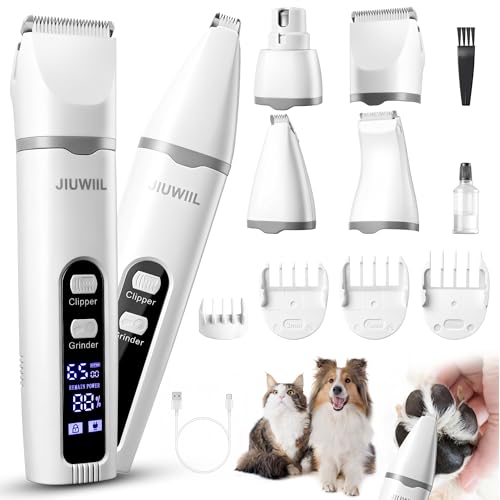
JIUWIIL Hundeschermaschine für die Fellpflege,4-in-1-Hundepflege-Set
- Complete Grooming Tools: Includes 3 trimmer heads and nail grinder
- Quiet and Low Vibration: Operates at approximately 50 dB
- Sharp and Safe Blades: High-quality ceramic blades for smooth cutting
As an affiliate, we earn on qualifying purchases.
As an affiliate, we earn on qualifying purchases.
How to Pick the Perfect Clipper for Your Dog’s Coat Type
Knowing your dog’s coat isn’t just about appearance — it directly influences the effectiveness and safety of grooming. A coat that is too dense or curly for a weak motor can lead to snagging, pulling, and even skin irritation, which can cause discomfort or aversion to grooming. Conversely, using a heavy-duty clipper on a delicate, silky coat might result in over-trimming or damage to the fur, affecting the coat’s natural protection and appearance.
Choosing the right clipper based on coat type ensures smoother, safer grooming sessions. For example, a high-powered, sharp-bladed clipper designed for dense, curly coats reduces the risk of snagging and makes trimming more efficient. On the other hand, a gentle, lower-power clipper suited for fine coats minimizes skin irritation and provides a more controlled cut. This compatibility influences not just the quality of the grooming but also your dog’s comfort and health, emphasizing the importance of matching tools to coat characteristics.
Furthermore, understanding the implications of using the wrong clipper can help you avoid common pitfalls. For instance, attempting to clip a double-coated breed with a tool meant for single coats can lead to coat damage, uneven trimming, and increased grooming time. Recognizing the tradeoffs—such as power versus delicacy—helps you make informed decisions that benefit your dog’s health and appearance. Matching the right tool to coat type isn’t just about convenience; it’s about ensuring your pet’s well-being and maintaining their natural coat integrity.
JIUWIIL Hundeschermaschine für die Fellpflege,4-in-1-Hundepflege-Set
- Complete Grooming Tools: Includes 3 trimmer heads and nail grinder
- Quiet and Low Vibration: Operates at approximately 50 dB
- Sharp and Safe Blades: High-quality ceramic blades for smooth cutting
As an affiliate, we earn on qualifying purchases.
As an affiliate, we earn on qualifying purchases.
Frequently Asked Questions
Can I use human clippers on my dog?
Human clippers aren’t designed for animal coats. They usually lack the blade spacing, power, and cooling features needed for safe grooming. Purpose-built dog clippers are safer and more effective, especially for thick or dense coats.
What clipper is best for a thick or curly coat?
Look for a powerful, professionally rated model with detachable blades and easily available replacements. A strong motor, sharp blades, and adjustable speeds are key to managing dense or curly fur safely and efficiently.
What is the difference between clippers and trimmers?
Clippers are larger tools meant for removing substantial amounts of coat, often full-body grooming. Trimmers are smaller, lighter, and designed for precise work on paws, faces, and sanitary areas. Use each for their intended purpose for best results.
Why do clippers pull or snag the hair?
This usually happens when blades are dull, dirty, or improperly aligned. Low motor power or a clogged filter can also cause snagging. Regular cleaning, sharpening, and lubrication help maintain smooth cutting and prevent discomfort.
Why does the blade get hot?
Friction, high speed, dirt, and dull blades generate heat. During long grooming sessions, pause to check temperature and apply oil. Proper maintenance prevents burns and extends your clipper’s life.
JIUWIIL Hundeschermaschine für die Fellpflege,4-in-1-Hundepflege-Set
- Complete Grooming Tools: Includes 3 trimmer heads and nail grinder
- Quiet and Low Vibration: Operates at approximately 50 dB
- Sharp and Safe Blades: High-quality ceramic blades for smooth cutting
As an affiliate, we earn on qualifying purchases.
As an affiliate, we earn on qualifying purchases.
Conclusion
Choosing the right dog grooming clipper isn’t about the biggest, loudest, or most expensive tool. It’s about understanding your dog’s coat, your grooming goals, and how to keep your equipment in top shape. A well-chosen, well-maintained clipper turns grooming from a chore into a bonding moment.
Remember, safety and comfort come first. Take time to prepare your dog, select quality tools, and follow proper maintenance routines. That’s how you turn grooming into a stress-free, even enjoyable experience for both of you.
Next time you pick up the clippers, think of it as an investment in your dog’s happiness and health. After all, a smooth coat isn’t just about looks — it’s about feeling good in your own skin.

oneisall Kabelloses Schermaschine Pferd, Leise Pferdeschermaschine für Dickes und Verfilztes Haar mit 7000RPM Leistungsstarkem Motor, geeignet für Dicke Pferdhaare
- Designed for thick, matted hair: Cuts through hair effortlessly
- Sharp, safe, detachable metal blade: Easy cleaning and maintenance
- Two adjustable speed settings: Customize speed for optimal grooming
As an affiliate, we earn on qualifying purchases.
As an affiliate, we earn on qualifying purchases.