
TL;DR
Researchers have developed a copper-lined vest aimed at helping injured penguins recover more effectively. The device is currently in experimental stages, with initial reports indicating potential benefits. The development has garnered significant attention amid rising concerns over penguin health and conservation efforts.
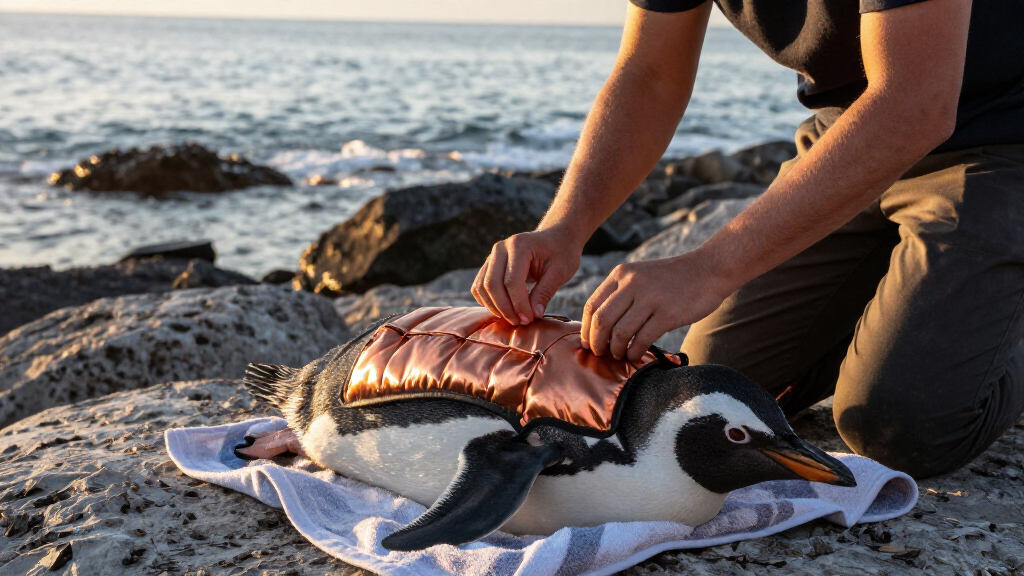
Scientists and conservationists are testing a new copper-lined vest designed to assist injured penguins in their recovery process. The device, still in experimental stages, aims to improve healing and reduce infection risks, potentially offering a new tool in wildlife rehabilitation. The development has attracted notable interest from the scientific community and environmental groups concerned about penguin populations.
The copper-lined vest was developed by a team of researchers specializing in wildlife rehabilitation and materials science. It is intended to be worn by injured penguins, providing a protective barrier that leverages copper’s known antimicrobial properties. The initial trials are being conducted on injured penguins in controlled environments, with early observations suggesting that the vest may help injured penguins recover faster.
According to sources close to the project, the vest is made from lightweight, durable materials with copper lining integrated into key areas. The aim is to create a wearable device that minimizes stress and discomfort while delivering therapeutic benefits. The project is still in the testing phase, with no definitive results yet published, but preliminary feedback from field veterinarians has been positive.
Potential Impact on Penguin Conservation Strategies
If proven effective, the copper-lined vest could represent a significant advancement in wildlife rehabilitation, especially for penguins affected by oil spills, injuries, or disease. By improving recovery rates and reducing the need for invasive treatments, this innovation could enhance conservation efforts, particularly in regions where penguin populations are under threat. The development also highlights growing interest in applying advanced materials and technology to wildlife health management.
Products Worth Considering

MateeyLife Napfunterlage Katzen, Napfunterlage Hund Groß Hundenapf | Kleine Hunde, Silikon Unterlage Hundenapf Grosse Hunde, rutschfeste Unterlage Katzennapf, Katzen Futternapf Matte, 45 x 30 cm
Sicher & Weniger Unordnung: Unsere napfunterlage katzen & napfunterlage hund sind aus hochwertigem silikon in lebensmittelqualität und sicher…

Gorilla Grip SilikonHaustierFuttermatte, wasserdicht, erhöhte Kanten, um Verschütten zu verhindern, einfache Reinigung in der Spülmaschine, für Hunde und Katzen, Platzierungstablett für Futter und
Wasserdichtes Design: Die Silikonmatte ist zu 100 % wasserdicht, um den Boden vor schmutzigen Lebensmitteln und Wasser zu…

SMILOOL Silikon Tierfuttermatte mit erhöhtem Rand für Futter und Wassernapf, Hundefuttermatten, Katzenfutterschalen für Boden wasserdicht, Gummiablage für Hunde und Katzen, 19 x 12 x 0,7 Hellolivgrün
Halten Sie Ihren Boden sauber – Um das Verschütten von Futter und Wasser auf dem Boden aufgrund der…
As an affiliate, we earn on qualifying purchases.
Increasing Focus on Innovative Penguin Care Solutions
In recent years, penguin populations worldwide have faced threats from climate change, oil spills, overfishing, and disease outbreaks. These challenges have intensified efforts to develop new methods for protecting and rehabilitating injured or ill penguins. The copper-lined vest emerges amid a broader trend of integrating scientific research with practical conservation tools. While traditional treatments remain essential, novel approaches like this vest reflect a shift toward more technologically driven solutions.
Interest in this particular device spiked following reports of initial testing phases, although details remain limited. The concept of using copper’s antimicrobial properties in wearable devices is not new, but applying it to wildlife recovery is a recent development that has attracted attention from the conservation community.
Unconfirmed Effectiveness and Broader Adoption
It is not yet clear whether the copper-lined vest will prove effective in large-scale or long-term applications. The current trials are limited in scope, and comprehensive data on healing rates, infection reduction, and overall health outcomes are still pending. Additionally, it remains uncertain whether the device will be adopted widely across different rehabilitation centers or regions.
Next Steps in Testing and Validation
Researchers plan to expand testing to include more injured penguins across various sites, with a focus on collecting detailed data on recovery outcomes. Peer-reviewed studies are expected to follow, providing more definitive assessments of the vest’s efficacy. Conservation groups and wildlife agencies are monitoring the developments closely, with potential for wider implementation if results are positive.
Key Questions
How does the copper-lined vest work?
The vest is designed to provide a physical barrier that leverages copper’s antimicrobial properties, aiming to reduce infection risks and support natural healing in injured penguins.
Is this device safe for all penguin species?
Safety assessments are still underway. Initial trials are limited to specific cases, and further testing is needed to confirm safety across different penguin species and injury types.
When will the vest be available for widespread use?
It is too early to determine availability. The device is currently in experimental testing, with more data needed before considering broader deployment.
Could this technology be used for other wildlife species?
Potentially, yes. If proven effective, similar principles could be adapted for other animals requiring recovery support, but further research is necessary.
Source: hn